
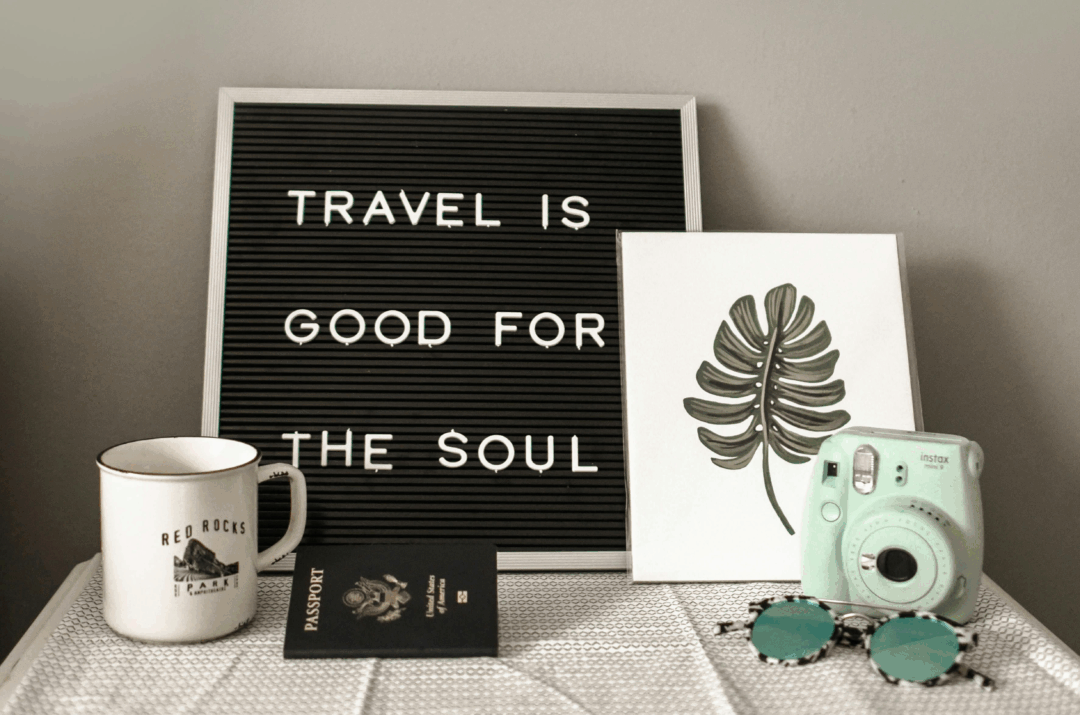
I have always had mental health issues, but I have also always loved traveling. These two things often don’t go together at all. Traveling is a major source of stress and strain on the psyche. Traveling with mental health challenges twice as much. I often tell myself that, as an autistic person who struggles with changes of environment, I haven’t chosen the best hobby. But because I love traveling so much, I find ways to make it more manageable for myself. Here are my best 5+1 tips. I think you might find them useful, even if you don’t struggle with mental health on a daily basis. They make traveling much more enjoyable and manageable.
1. Do your research
I find out everything I can in advance. I make a list of things I want to see, write down their opening hours and addresses, and mark them on a map. I look at photos of the accommodation and read the reviews thoroughly. I also research details such as whether the bed is comfortable or whether the apartment has heating (important for me in southern European countries during winter). I found out how to get from the airport to my accommodation. I check the route on Google Street View. Basically, I research everything I can in advance. My autism benefits from knowing what to expect. Photos of the accommodation play a big role in helping me feel comfortable in advance. (I choose accommodation based on how it looks; for me, it’s not just a place to sleep at night, but it has a significant impact on my mental well-being during my stay.) Having an overview of every factor I can find out about helps with general anxiety and uncertainty, so you know you won’t be fumbling around and panicking when you get there. I also have a packing list that I print out before I travel and just tick off. This helps with pre-travel stress.
2. Have one main goal
I choose one main goal for my stay that I want to see, and when I achieve it, I’m done. This helps me avoid rushing from one attraction to another, falling behind, and getting stressed out. Similarly, I choose only one goal to visit each day and leave the rest up to chance. Of course, I also research other options for what to see. I’m very thorough in this, and I enjoy finding out what there is to experience. But these are just options, nothing forces me to visit them at all costs. In Marseille, for example, my main goal was the Chateau d’If, and in Toulouse it was Carcassonne. With one goal, it was easy to manage, and the rest of the things to see were just a bonus.
Before I started doing this, I was constantly stressed throughout my stay, trying to catch up with the next thing, and the next thing, and the next thing… Because I wanted to see everything. Having just one main goal to stick to is a great relief in this regard.
3. Think about food
I used to neglect food when traveling. I was constantly rushing from one thing to the next and only ate when I happened to have time. Who cares about food when a new country and lots of opportunities for new experiences surround you? But this often left me tired and grumpy. I also often looked for last-minute options to eat and had to settle for something unhealthy and not entirely good for my digestion.
Now I’ve learned that I simply have to set aside time for food, no matter how interesting the place I’m exploring is. If I don’t have time to cook, I need to have money to go out for lunch. I need to have one hot meal a day and not skimp on it. Before I set out to explore, I always eat breakfast. I usually bring breakfast from home—a mixture of oats with hemp protein and sunflower seeds, which I just soak in water in the evening. When I’m somewhere for a longer period of time, I buy muesli and yogurt. The first thing I do when I arrive at a new place is go shopping so that I have enough food for dinner. I usually think about what I want to eat in advance. Simply put, don’t try to skimp on food. Expect that food will require either time to prepare or money, and you will need to invest in one of those things.
4. Talk about unspoken problems
If you are traveling with a partner, sit down before the trip to talk about your relationship, what bothers you, what you would like to change, and what issues remain unresolved. These things tend to come up when traveling, and in the most stressful situations, when it is not ideal to deal with them. With my ex, we always had some unhealthy dynamics come to the surface when we were traveling. We often ended up arguing or even almost breaking up. I remember how, in Venice, the most romantic city, I almost said, “So we’ll have to break up, won’t we?” and wondered if I could go drown myself in a canal. Traveling always causes tense situations. Try to avoid trouble by going into it with a clear head and a clean slate.
5. Pack the important things
Always remember to bring things that help you feel comfortable. I remember once not packing my “home” sweatpants because they were too bulky for my small carry-on bag, and then regretting it the whole time I was there. Whether it’s a favorite stuffed animal that helps you fall asleep, a French press for your morning coffee, or a cozy sweatshirt, if it helps you feel good, bring it. Even if other travelers turn up their noses at it. Everyone has different things that help them stay in a good mental state, and it’s good to think about them. Being calm and feeling good is worth that little bit of space in your luggage.
6. Always have “Oh Shit Money”
It’s important to always have a dedicated reserve in your account in case of trouble. It helps prevent dangerous situations. If I find myself in an unfamiliar place in the dark unexpectedly, I’ll know that I can take a taxi instead of wandering around on foot. If my accommodation falls through, I’ll know I can book a new one. If I miss my flight, or if I feel mentally unwell and need to go home early, I’ll be able to buy a new ticket. And if I find myself wandering around hungry, I can go out for lunch or dinner. You set aside this money in advance and expect that you may spend it in a crisis, so you won’t have a problem dipping into it without much ado about how expensive it is.
These are five plus one things that have made my travels much more manageable and enjoyable. Remember, it’s not a competition to see who is the toughest, fastest, or can see the most. The important thing is that you feel good. Tailor your trips to your own needs. Often, even a small thing can have a big impact on how you feel when traveling.
What helps you? Let me know in the comments!
No Comments